
Dementia and neurological care
Personalised support at home for adults living with dementia, acquired brain injury, epilepsy and progressive neurological conditions.
Support is built around dignity, familiar routines, communication, relationships and independence, and adapts as needs change.
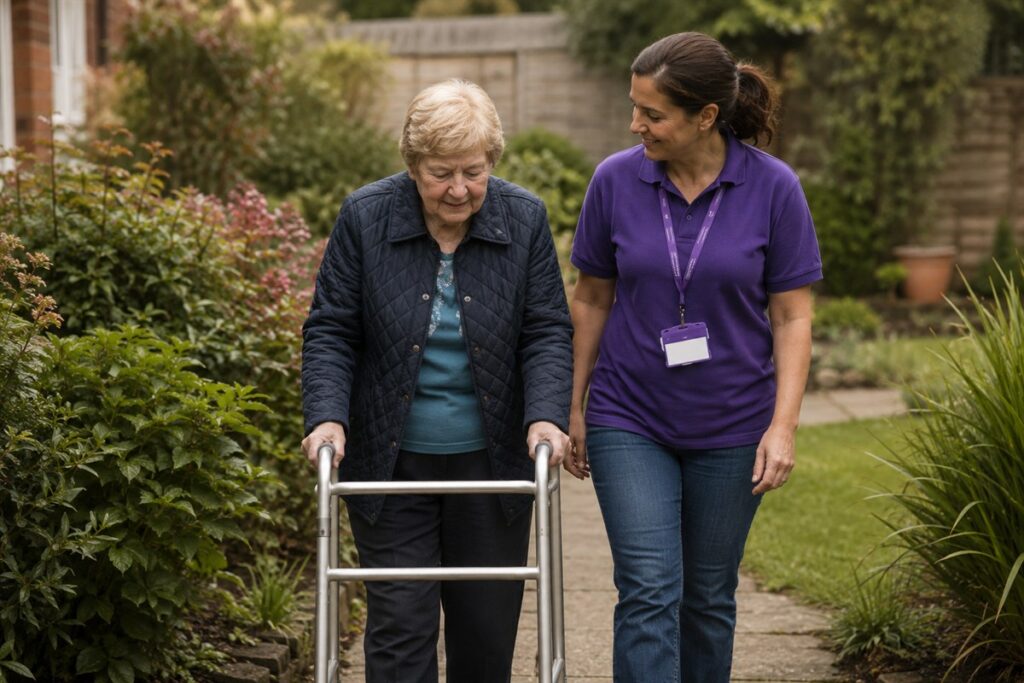
Familiar routines
Support is shaped around communication, cognition, mobility, fatigue and the routines that already work, alongside the person’s history, relationships and preferences.
Keeping what is familiar in place often matters more than adding something new.
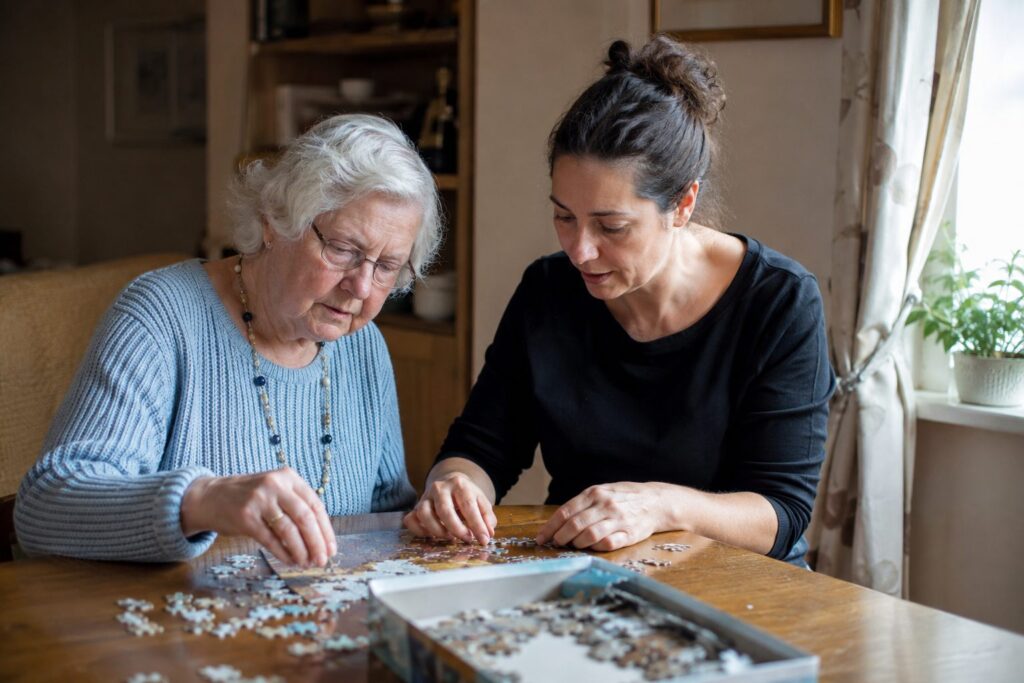
Conditions
Support is planned around the person and how their condition affects daily life, not around the diagnosis alone.
What support includes
Everything below is agreed at assessment and set out in the care plan.
Discreet support with washing, dressing, continence and the practical parts of the day, at the pace that suits.
Keeping the shape of the day familiar, with prompts, reassurance and a calm approach when things feel unsettled.
Adapting how we communicate, and supporting the relationships and connections that matter to the person.
Support with transfers, walking and equipment, using techniques agreed with the relevant professionals.
Medicines as set out in the care plan, support with meals and hydration, and waking or sleeping night support where agreed.
Getting out, keeping interests alive and staying connected to the places and people that give the day meaning.

Changing needs
Progressive conditions rarely stay still. Support is reviewed at agreed intervals and after any change, with families kept in the conversation.
Where something needs a clinician, we escalate through agreed routes to the relevant professionals rather than acting outside our remit.
Risk and safety
Support for changing conditions depends on noticing change early and acting through the right route.
Getting started
Three steps from first call to an agreed plan.
Delivery models
The same support can sit inside different service models, depending on what suits the person.
Tell us about the person and what has been changing. We will explain the options and give an honest response about assessment, capacity and next steps.
Dementia and neurological questions
Often yes. Support is reviewed and adjusted as needs change, and can increase from occasional visits through to live-in or complex care without changing provider.
We adapt how we communicate to the person, using the approaches that work for them, and record what helps so the whole team is consistent.
Yes. Where seizure-related protocols form part of an agreed care plan, colleagues are trained and competency-assessed for that individual and work within the written protocol.
No. Diagnosis and clinical treatment sit with the relevant clinicians. We provide care and support, and escalate concerns through agreed routes.
Changes are recorded and escalated through the agreed route to the relevant professionals, and the care plan is reviewed with the person and their family.
Call 01934 416585, email enquiries@ultimate-complex-care.co.uk or use the referral form on this website.
Make a referral
Tell us about the support required and our team will contact you to discuss the next steps.
See our Privacy Policy for how we handle your information.