
Discharge and recovery
Coordinated support to help adults return home safely after a hospital stay and rebuild everyday routines, confidence and independence.
Availability depends on assessment, commissioning, capacity and the agreed discharge pathway.

Discharge to assess
Where a Discharge to Assess pathway is agreed, support at home helps assessment happen in the person’s own environment.
Support is arranged to begin in line with the agreed discharge plan, capacity and mobilisation arrangements.
Colleagues observe and record how the person is managing, and report changes through agreed routes.
We provide what we see at home to the assessing team. Decisions about discharge readiness and longer-term needs rest with them.
Community rehabilitation
Rehabilitation goals set by therapists and clinicians are carried into daily life at home.
Support to regain personal care routines at the person’s own pace, doing as much for themselves as they can.
Practising transfers, moving around the home and re-establishing the rhythm of the day, using agreed techniques and equipment.
Getting back out to appointments, shops, groups and the places that matter, with support that reduces as confidence returns.
Support with meals, hydration, medicines as set out in the care plan, rest and the things that aid recovery.
Who it supports
Support is planned around the person and the discharge pathway agreed for them.
Clinical support
As a CQC-regulated provider registered for Treatment of Disease, Disorder or Injury, Ultimate Complex Care can support the delivery and oversight of delegated healthcare tasks where these form part of an agreed care plan. Ultimate Complex Care does not replace GPs, District Nurses, specialist nurses or other NHS clinicians.
How it works
Three stages, each with a clear owner and a clear handover.
Working together
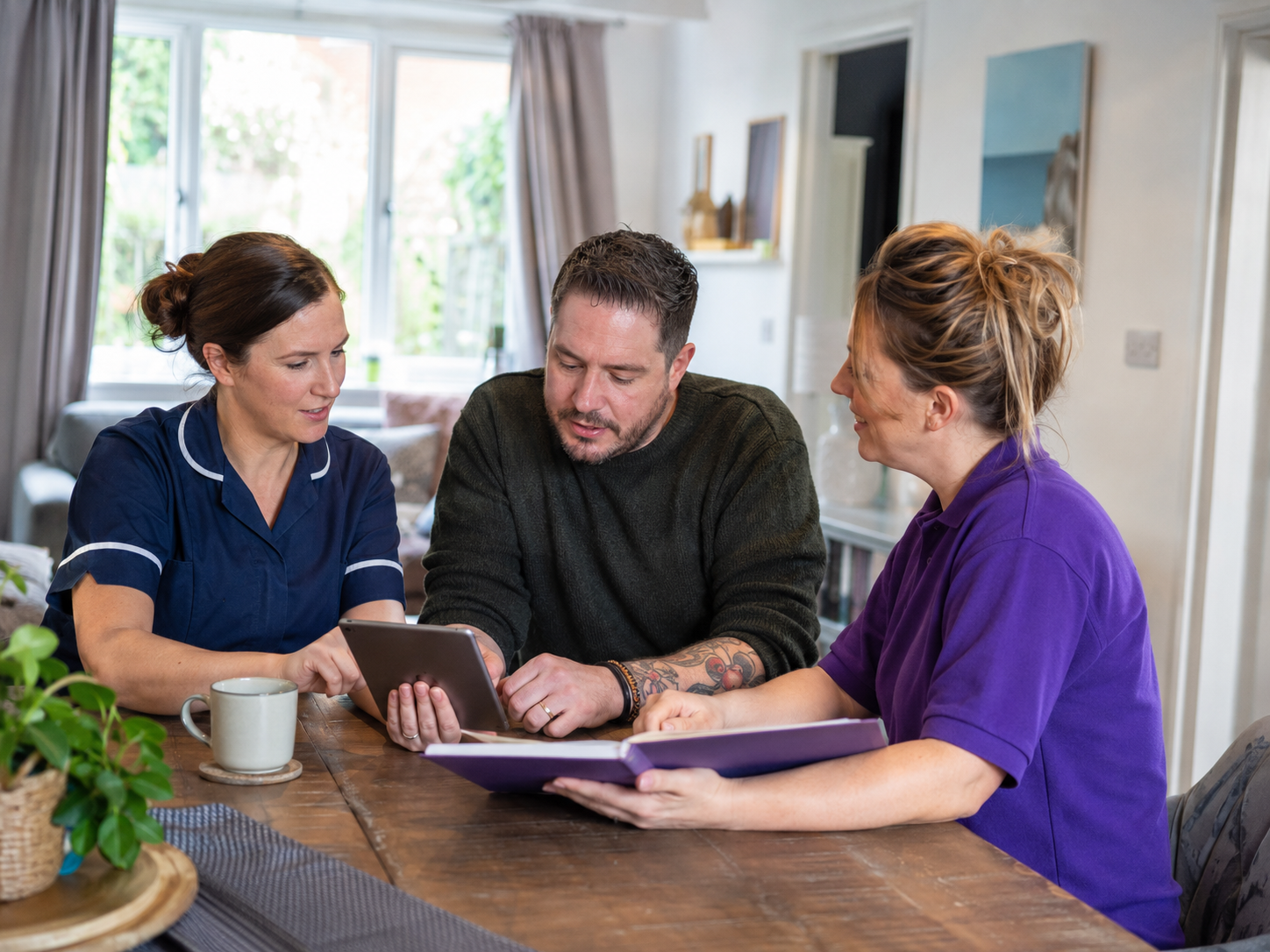
Discharge works when the plan is shared and everyone knows what changes. We keep communication open with the discharging team, community services and the family.
Appropriately trained and competency-assessed care staff work within clearly defined protocols, with Registered Nurse leadership and clinical oversight where applicable, and in partnership with the relevant NHS or healthcare professionals.
Tell us about the person and the discharge pathway. We will explain what can be arranged and give an honest response about assessment, commissioning, capacity and timescales.
Discharge questions
Support begins in line with the agreed discharge plan, commissioning arrangements and our current capacity. We give an honest answer on timescales when we take the referral.
No. Discharge readiness and longer-term needs are decided by the assessing team and the relevant clinicians. We provide what we observe at home to support their assessment.
Support with personal care, mobility, meals, medicines as set out in the care plan, and re-establishing daily routines, with hours that reduce as independence returns.
Where a delegated healthcare task forms part of an agreed care plan, trained and competency-assessed colleagues work within defined protocols, with Registered Nurse leadership and clinical oversight where applicable. We do not replace GPs, District Nurses, specialist nurses or other NHS clinicians.
It depends on the pathway, the person’s progress and the commissioning arrangement. Packages are reviewed and adjusted as needs change.
Use the professionals and referrals route on this website, call 01934 416585 or email enquiries@ultimate-complex-care.co.uk.
Make a referral
Tell us about the support required and our team will contact you to discuss the next steps.
See our Privacy Policy for how we handle your information.