Development

Learning and Development

Competence in care is demonstrated, not assumed. Everything below exists so that what we say colleagues can do is what they have actually been assessed to do.

New colleagues complete a structured induction aligned to the Care Certificate. Nobody works unsupervised with someone they have not been introduced to, and nobody carries out a task they have not been signed off for.

Colleagues talking together over tea in the office kitchen

The foundation

Induction and the Care Certificate

Induction covers the fifteen Care Certificate standards, including duty of care, safeguarding adults, person-centred working, communication, privacy and dignity, infection prevention and control, basic life support, and equality and diversity.

Alongside the classroom element, new colleagues shadow experienced staff before working independently, and practice is observed before sign-off.


Support worker and the person they support looking through records together
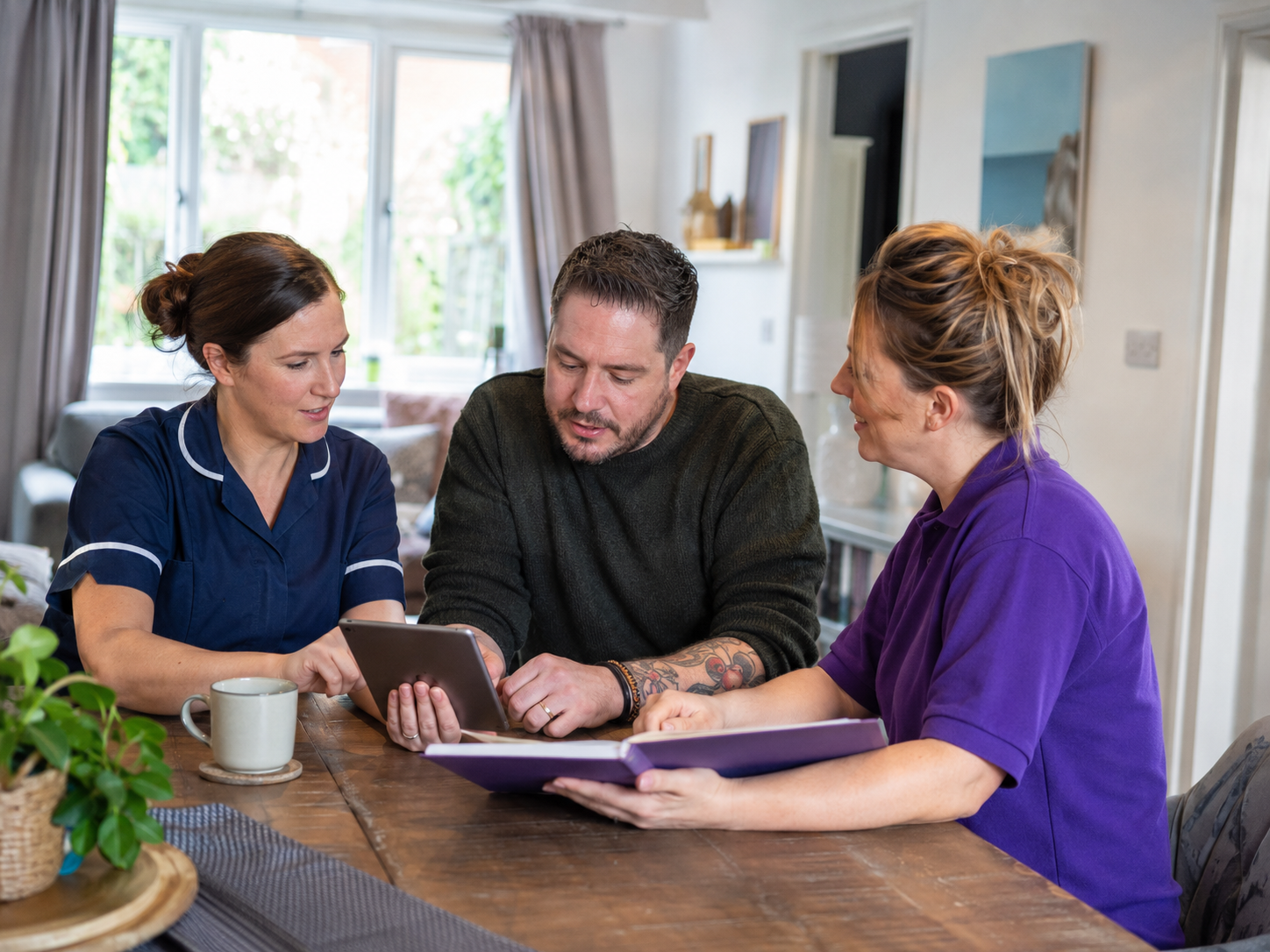
Registered Nurse and support worker reviewing an agreed care plan at home

Beyond induction

Specialist and Continuing Development

The people we support have varied needs, so training continues past induction and is matched to the people a colleague actually works with. That includes areas such as epilepsy awareness and rescue medication, PEG and enteral feeding, catheter and stoma care, moving and handling, dementia, autism and Positive Behaviour Support.

Refresher training is scheduled by subject rather than annually across the board, because the interval that keeps basic life support current is not the interval that keeps epilepsy rescue medication current. Colleagues are told when each of theirs is due.

Join us

Build a Career With Support Behind You

If you want to work with adults aged 18 and over and are willing to learn, we would like to hear from you.

Make a referral

Make a Referral

Tell us about the support required and our team will contact you to discuss the next steps.